

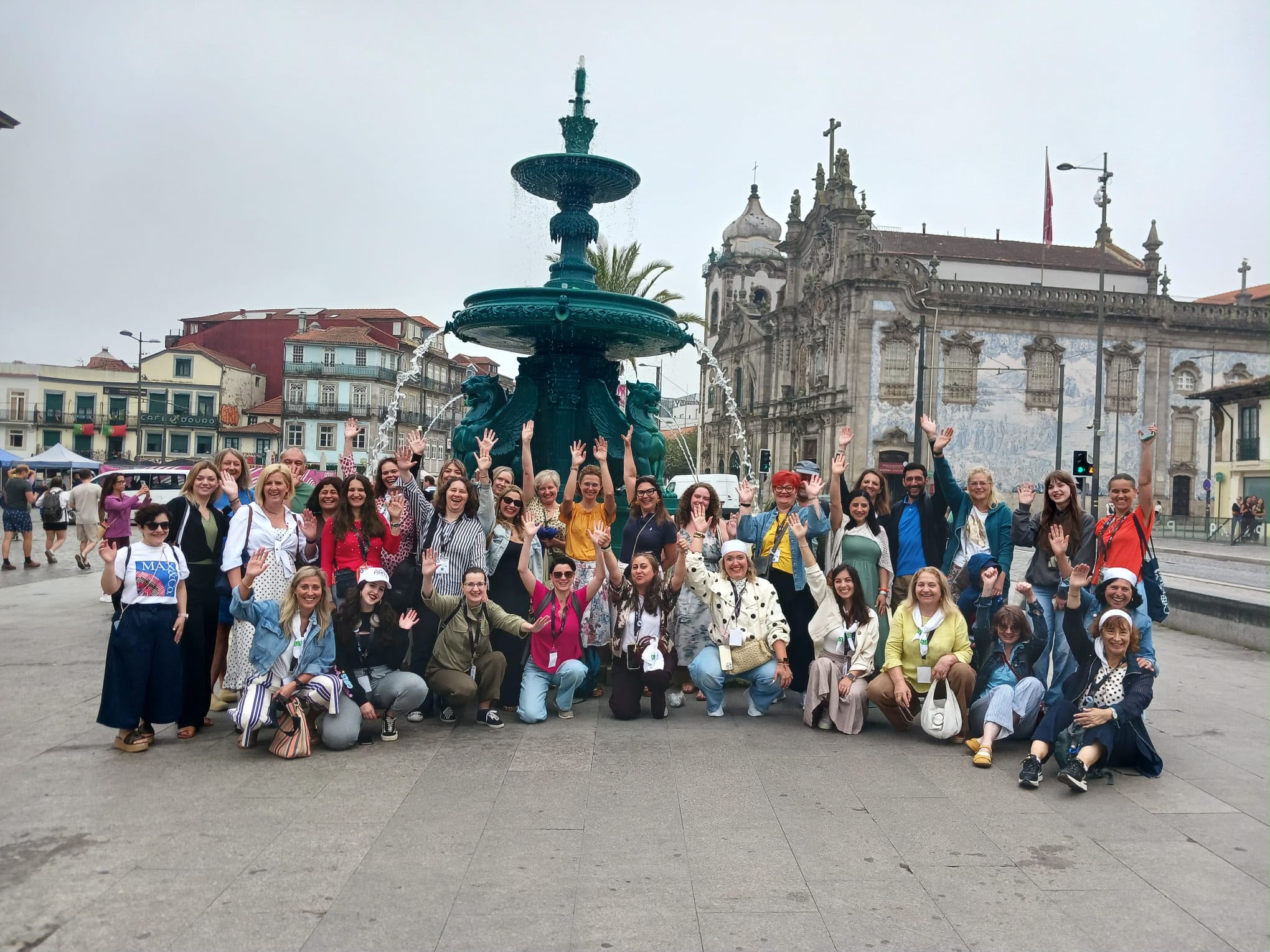
From July 6 to 10, 2026, the University of Porto, through SASUP (Serviços de Ação Social da Universidade do Porto), hosted the blended intensive programme “Challenges of Social Services in Higher Education”. The event was organized in partnership with the „Gheorghe Asachi” Technical University of Iași (TUIASI) and Lodz University of Technology from Poland.
This collaboration brought together academic and administrative staff, international relations professionals, student and social services professionals, and students from the three partner institutions. Together, they created an authentic framework for inter-institutional dialogue dedicated to the current challenges faced by social services in the European university environment. The programme focused on exchanging best practices, fostering international cooperation, and identifying innovative solutions for inclusion, well-being, and student support.
TUIASI was represented by:
-
Mrs. Ana-Maria Șoican, Erasmus Institutional Coordinator
-
Mrs. Cornelia Murariu, from the Vice-Rectorate for Student Affairs
-
Mrs. Gina Corban, Chief Administrator at the Faculty of Electronics, Telecommunications and Information Technology
The Virtual Component
The online meeting, Virtual Kick-off – “Higher Education Inclusion,” facilitated an initial introduction among participants. It featured five presentations delivered by representatives of the three partner universities, followed by open discussions and a Q&A session.
The central theme of this component was inclusion in higher education, illustrated through several key initiatives implemented by the University of Porto:
-
Inclusion Support Office: Individualized support for students with special educational needs;
-
Physical and Digital Accessibility: Adapting campus buildings and continuously improving digital platforms;
-
Personalized Pedagogical Support: Accessible learning formats, interpreters, and assistive technologies;
-
Student Integration and Well-being: Welcoming services, psychological support, and academic guidance;
-
Promoting Inclusive Cultures: Valuing diversity across the entire academic community.
The on-site component in Porto
The in-person component of the programme, held for one week in Porto, combined academic activities with opportunities for intercultural connection. The schedule included: institutional visits to the SASUP headquarters; an intensive Portuguese language crash course; thematic workshops focused on the challenges of university social services; cultural activities to explore the city and experience local gastronomy.
Impact of participation for TUIASI
The participation of TUIASI’s representatives created benefits that will positively shape the institution’s activities in both the medium and long term:
-
Increased Institutional Visibility: TUIASI’s presence as a key partner alongside the University of Porto and Lodz University of Technology strengthens the Polytechnic’s position in European collaborations dedicated to student inclusion and well-being;
-
Developing Best Practice Models for Inclusion: Getting a first-hand look at the support structures developed by the University of Porto provides valuable, actionable benchmarks for upgrading TUIASI’s own support services;
-
Strengthening International Cooperation: The contacts established with specialists from Portugal and Poland open new doors for joint projects, exchanges of experience, and future Erasmus+ mobilities;
-
Expanding Professional Competencies: TUIASI staff expanded their professional skills by participating in dedicated, hands-on workshops;
-
Broadening Perspectives for International Students: The insights gained will help improve the reception and integration services offered to foreign students arriving at TUIASI.
An experience with lasting impact
By successfully blending virtual and on-site collaboration, this programme demonstrated the immense value of European cooperation in university social services. It successfully equipped participants with concrete tools and fresh perspectives to actively promote equity, inclusion, and student well-being on their home campuses.